PrivacyPolicy
What this site collects, where it goes, and what we do not do with it. Written to be read, not to be scrolled past. Last updated October 7, 2026.
This page is a general policy, not legal advice, and no attorney has reviewed it. Have one read it before this site goes live. Whether it is sufficient depends on Utah law, on where your customers are, and on what the business actually does — do not assume this page covers you.
It also describes this website only. What happens on the phone, in the office inbox, in a CRM, or in the photographs crews take on a job site is not covered here, and should be reviewed at the same time.
The short version
- —We are a remodeling contractor. We collect what we need to answer you and price your project, and nothing else.
- —We do not sell your information, and we do not share it for advertising.
- —The estimate form needs a phone number, and asks you to tick a box saying we may ring or text you about your project. A person calls you — no autodialer, no recorded messages. Reply STOP to any text to end them.
- —There are no analytics, advertising, or social tracking scripts on this site. None. That is why there is no cookie banner.
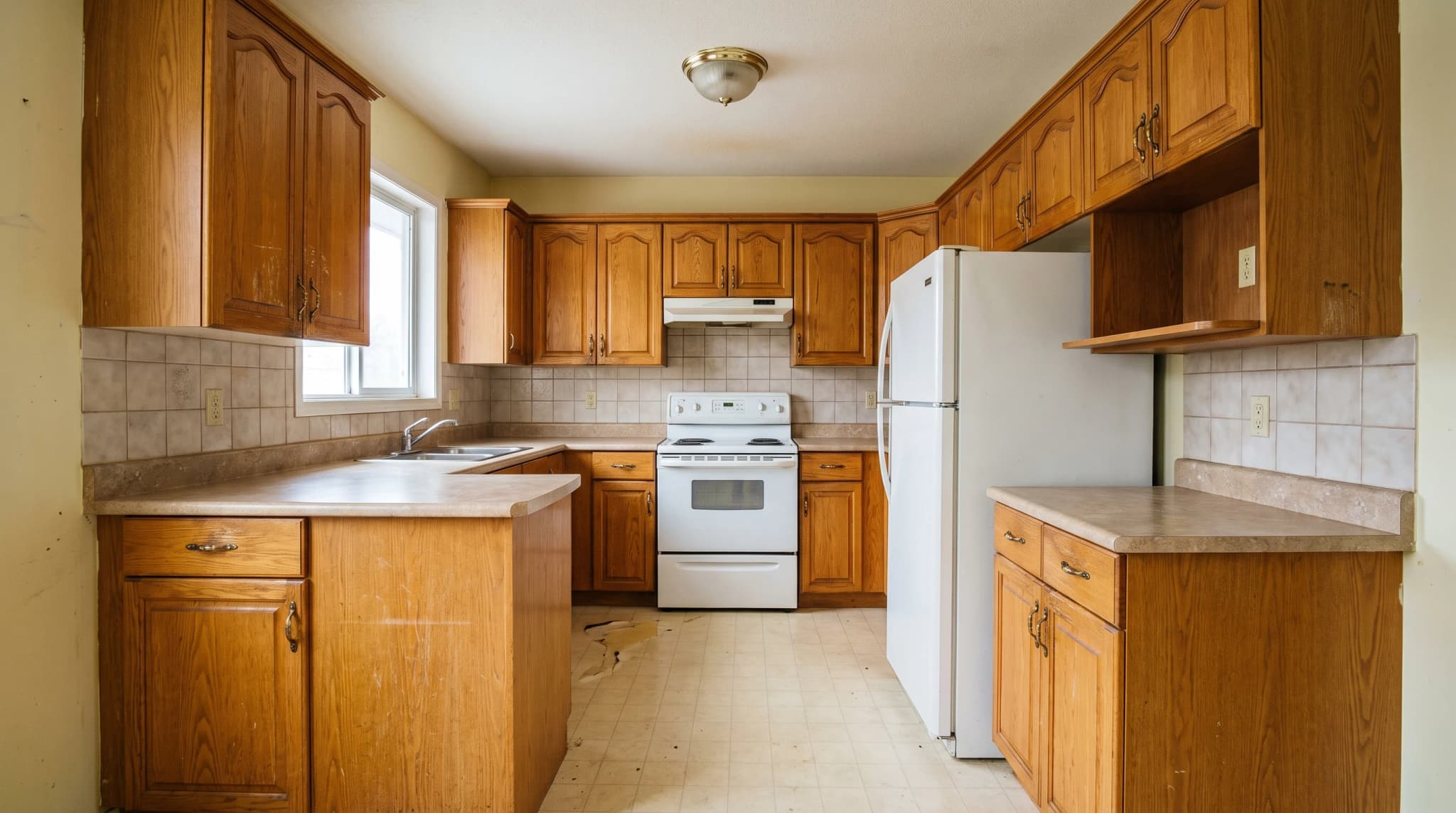
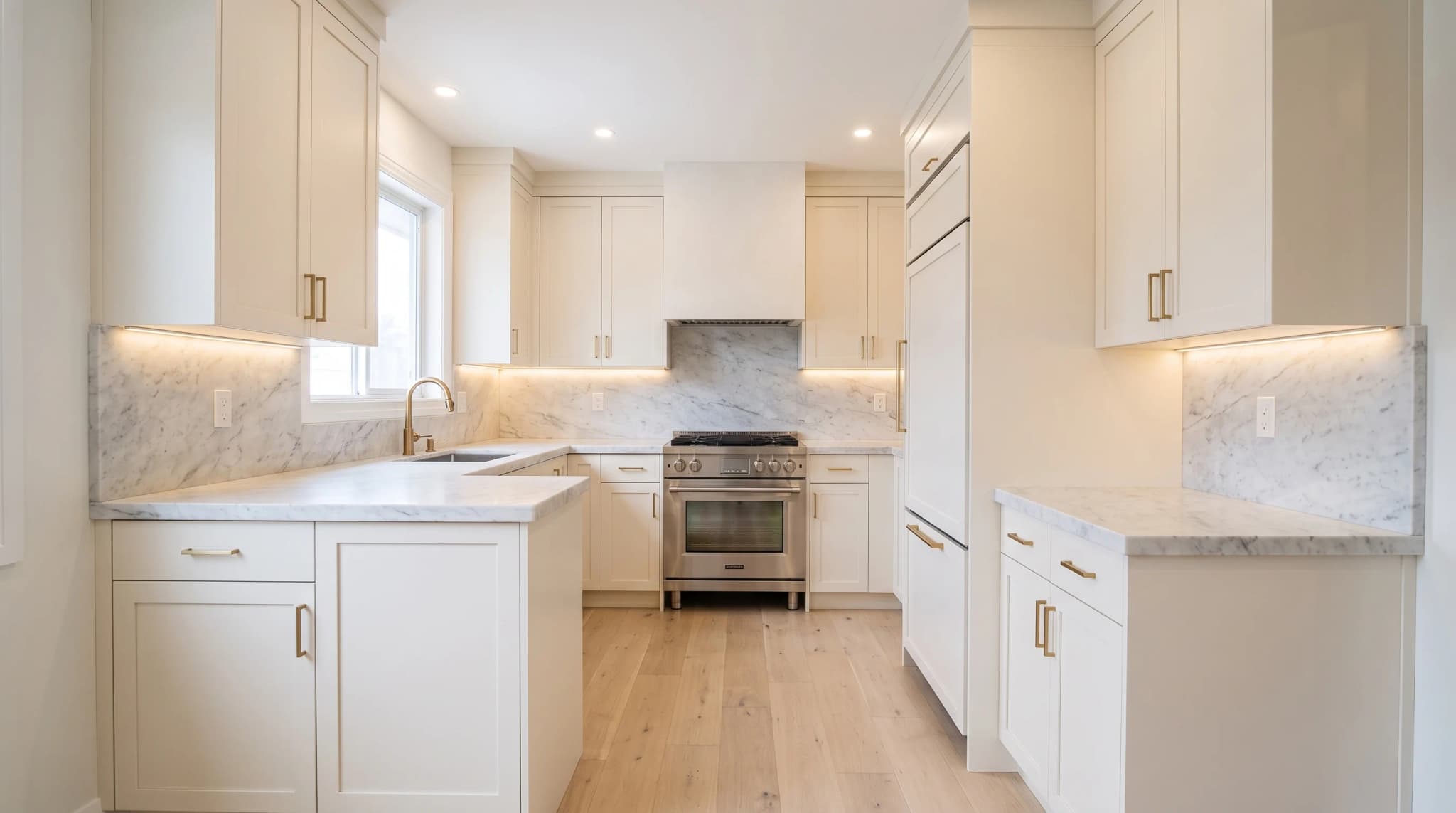
- —If you use the room visualizer, the photo you upload is sent to Google to generate the image. We do not keep a copy of it, and we do not keep the result.
- —You can ask us what we hold and ask us to delete it, any time, at nate@banddelitebuilders.com.
What we collect, and why
There is one form on this site, and one tool that takes a file. That is the whole of it — you can browse every other page without giving us anything.
The estimate form. It asks for your name, email address and phone number, and then optionally the service you are interested in, the size of the project, a budget range, and whatever you want to tell us about it. We also record which page of the site you sent it from, so we know what you were looking at when you decided to write.
The phone number is required because a remodel is not a thing anyone quotes by email alone — the next step is a conversation. We use what you send to answer your enquiry. We only send you anything else if you ticked the optional box to say we could.
Your consent, and the record of it. When you submit the form you tick a box agreeing that we may contact you. We store what that box said word for word, the date and time, and the IP address it came from. We keep that record so we can show what you agreed to if it is ever questioned — it exists to protect you as much as us, and it is not used for anything else.
The form also carries a hidden field that no person ever sees. Only automated spam bots fill it in, and when it is filled in we discard the submission without sending it anywhere.
The room visualizer, and your photo
This is the one place on the site where something genuinely personal — a photograph of the inside of your home — leaves our hands. So here is precisely what happens to it.
- —You choose a photo of a room. Your browser uploads it to our server.
- —Our server sends that photo to Google’s Gemini API, along with the room and style you picked and any description you typed. Google’s model is what actually generates the image.
- —Google returns a new image. We pass it straight back to your browser and show it to you.
- —If you ask for a change, the generated image and your instruction are sent to Google the same way. Each visit gets one render plus a small number of refinements.
We do not store your photo, or the result. Your photo sits in our server’s memory for the few seconds it takes to hand it to Google, and then it is gone. There is no upload folder and no database of customer photos. The images stay in your own browser tab and are discarded when you close it — if you want to keep one, save it while it is on screen.
Unless you send it to us with an enquiry — which is your choice, and you can see it before you make it. If you have made a render and you then fill in the contact form, the form offers to bring the photo and the render along, so that whoever rings you back has already seen the room. That panel sits at the top of the form, it shows you exactly which pictures are attached, and it has a “don’t send any of this” link that removes them. Nothing is attached if you never made a render, and nothing is sent unless you submit the form.
If you do send them, they travel with the rest of your enquiry and land in the same two places it does: the inbox and the private team chat described above. From that point they are an attachment on a message, kept as long as the enquiry is kept, and covered by the same retention and deletion terms as everything else on this page.
What happens at Google’s end is governed by Google. We use the paid Gemini API. For paid use, Google states that it does not use what we send to train or improve its models, and that it logs prompts and responses only for a limited period to detect abuse. We are reporting Google’s published position, not making our own promise about it — read the Gemini API terms and the Google Privacy Policy and judge for yourself.
Please photograph the room, not the people in it. Keep faces, children, pets, paperwork, screens, mail, keys, and anything else identifying or valuable out of the frame. Once a photo has been sent we cannot pull it back, and we have no way to reach into Google’s systems and delete it. Do not upload anything you would mind a third party holding.
What the site records on its own
Your IP address, if you use the visualizer. Every image the tool makes costs us money, so we cap how many one visitor can generate in a day, and how many the whole site generates in a day. To count them we store your IP address alongside a date and a number in our database. It is not linked to your name, your form submission, or anything else you have done on the site, and rows older than a week are deleted.
Ordinary server logs. Our web host records what any web server records: the page requested, the time, the IP address it came from, and the browser that asked. If an estimate request ever fails to send, the contents of that submission are written to those logs too, so we can find it rather than lose it. Logs age out on our host’s normal schedule.
Nothing else. No profile is built, no visit is stitched to a previous one, and nothing is scored or segmented.
Who else sees your information
Running a site like this means using a few outside services. Here is every one that can see something about you, and what it gets. None of them is paid to advertise to you, and we sell your information to nobody.
- —Google (Gemini API) — generates the remodeled image. Receives the photo you upload and the words describing what you want changed.
- —Resend — delivers your estimate request to our inbox as an email. Receives everything you typed in the form. Like any email provider, Resend keeps a copy in its own sending logs for a limited period — currently 30 days on its standard plans — before deleting it.
- —Telegram — carries the same estimate request to a private group chat, so that whoever is on site can see it straight away. Receives everything you typed in the form and, if you chose to send them, the photo and the render. This is us notifying ourselves; Telegram is never used to message you.
- —Supabase — hosts the database behind the site, including the daily counters described above. That is where the IP addresses sit for their week.
- —Our web host — serves the site to you and keeps the standard server logs described above.
- —Unsplash — some photographs on this site are currently served from Unsplash’s image CDN, so your browser fetches them directly and Unsplash’s servers see your IP address, exactly as with any image loaded from another site.
Beyond that, we will hand over information if the law genuinely requires it — a subpoena or a court order — or if it is needed to protect someone’s safety. If the business is ever sold, customer records would pass to the buyer along with everything else, and this policy would follow them.
How long we keep things
- —Estimate requests — they arrive as email and stay in our inbox as ordinary business correspondence: through your project, and afterwards for as long as we might reasonably need them for warranty, tax, or contract reasons. Ask us to delete yours and we will.
- —Photos in the visualizer — not kept at all. There is nothing on our side to delete.
- —Visualizer counters — the IP address and count are deleted after about a week.
- —Server logs — our host’s standard retention, measured in weeks rather than years.
- —The visualizer cookie — 24 hours, then your browser drops it.
Cookies and browser storage
There are no advertising cookies and no analytics cookies on this site, which is why you were not asked to accept any. Two things are stored, and both exist to make a feature work.
- —bdb_viz (a cookie) — set only if you use the visualizer. It counts how many images you have generated so the per-visit allowance holds. It is signed so it cannot be edited, marked HttpOnly so no script on the page can read it, and it expires after 24 hours. It contains a random ID and a number, and nothing about you.
- —bdb_intro (browser local storage) — remembers when you last saw the short opening animation and which one you got, so it does not replay on every visit. It stays in your browser and is never sent to us.
Clearing your browser data removes both, and nothing on the site breaks if you do. You will just see the opening animation again.
What we do not do
Worth stating plainly, because plenty of sites this size do the opposite:
- —We do not sell your personal information, and there is no arrangement under which we might.
- —We do not share it for targeted advertising, and we do no profiling or automated decision-making.
- —We run no Google Analytics, no Meta Pixel, no session recording, and no third-party tracking script of any kind. Open your browser’s network tools and check.
- —We do not add you to a newsletter because you filled in a form — only if you ticked the separate, optional box asking for one.
- —We do not keep the photos you upload to the visualizer.
Calls and text messages
A person rings you. Worth saying plainly, because most policies that mention calls mean something else: we do not use an autodialer, we do not send prerecorded messages, and we do not run your number through a bulk texting platform. Someone here picks up a phone and calls the number you gave us.
Ticking the box on the estimate form lets us reach you about your project by phone, text and email. It is not a condition of getting an estimate, and it is not a condition of anything you buy — if you would rather we only emailed, say so and we will.
Stopping them. Reply STOP to any text and they end. Reply HELP and you get a way to reach a person. You can also just tell us — by email, or on the phone to whoever you are speaking to — and it carries the same weight. We act on it immediately and in no case later than ten business days.
Message frequency varies with your project. Your carrier’s message and data rates may apply; we do not charge for them and we do not receive any part of them.
The optional promotions box is separate, and separately reversible. It is the one place we ask for permission to use an automated system, because that is how promotional texts get sent if we ever send any. Leaving it unticked costs you nothing, and turning it off later does not affect our ability to answer you about work already under way.
Your choices, and Utah
You can ask us to tell you what we hold about you, send you a copy, correct it, delete it, or simply stop contacting you. Email nate@banddelitebuilders.com or call (801) 717-0608. We will deal with it as quickly as we can and within 45 days at the outside. Please write from the email address or phone number you used to contact us, or we may have to check you are who you say you are.
Two honest limits on that:
- —We cannot delete a visualizer photo from Google’s systems. We never held a copy to delete, and we have no access to theirs.
- —We may keep an estimate request where we need it for a contract, a warranty, or a tax record. If that applies to yours, we will tell you.
About the Utah Consumer Privacy Act. The UCPA took effect at the end of 2023 and gives Utah residents rights over their personal data. It reaches further down the list of thresholds than some state laws do: a business has to clear roughly $25 million in annual revenue and handle data on at least 100,000 Utah consumers a year, or 25,000 while making most of its money selling data. A local remodeling company is nowhere near any of those, so the UCPA almost certainly does not apply to us. We are not claiming to be certified, audited, or formally compliant with it, and we have no data processing agreements to point at. We think the rights it describes are fair, so we will honor the requests above from anyone who asks, whether the law obliges us to or not — including correcting your information, which the Utah statute does not actually require.
Children
This site is for homeowners. It is not directed at children, we do not knowingly collect anything from anyone under 13, and there is nothing on it aimed at them. If you believe a child has sent us something through this site — a form, or a photo through the visualizer — email us and we will delete whatever we have.
Keeping it safe
Everything you send travels over an encrypted connection. The visualizer cookie is signed so it cannot be tampered with and cannot be read by scripts. Estimate requests go to a small number of people here and nowhere else. The usage counters are reachable only by our own server, never by anything running in your browser.
We are a remodeling contractor, not a security company, and no system is perfectly safe. Please do not send Social Security numbers, bank or card details, or copies of identity documents through the form — email is not a secure channel. If we ever need something like that, we will arrange a better way to get it.
Changes to this policy
If we change how this site handles information — a new tool, a new service behind it — we will update this page and change the date at the top. If the change is significant, we will say what it was rather than quietly editing the text.
Getting in touch
Questions about this policy, or a request about your information, come to us directly. A real person reads them.
The rules for using the site itself are in our Terms & Conditions. Ready to talk about an actual project? Start here.
Last updated October 7, 2026.